AI Infrastructure
ExperimentalSelf-Hosted AI Infrastructure
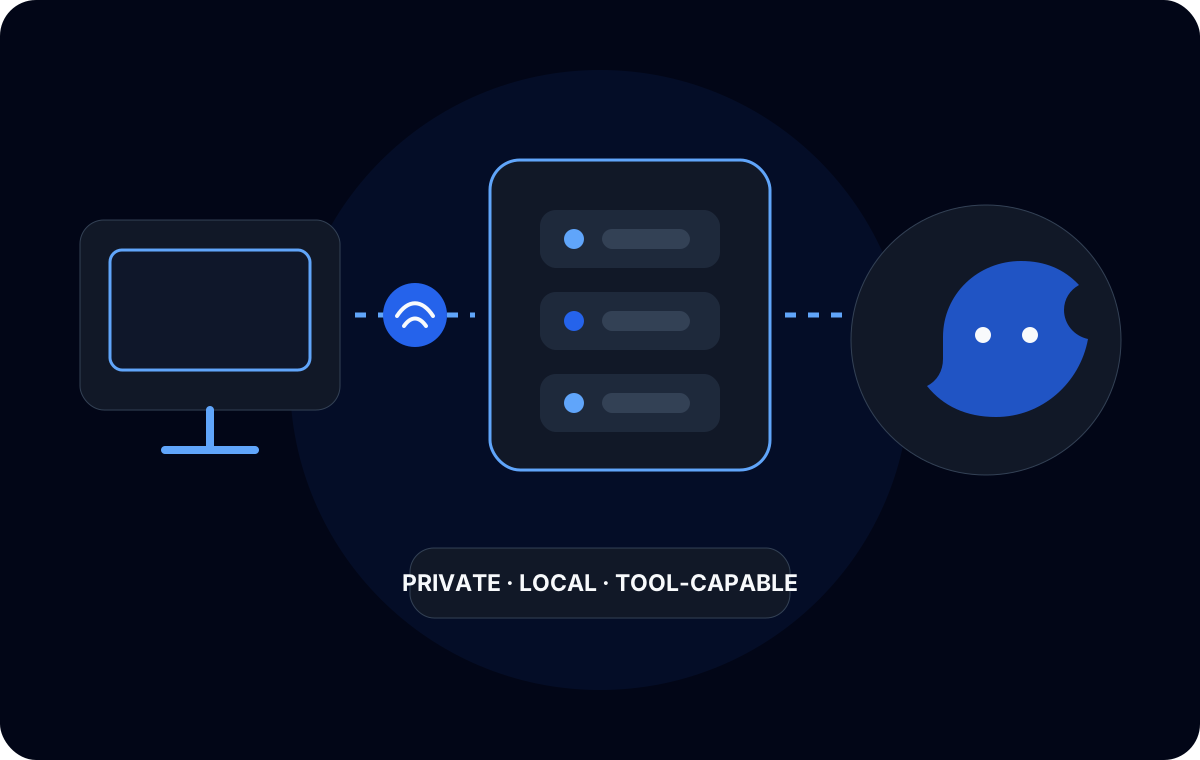
A practical private AI development environment that connects a Windows workstation to Apple Silicon inference through a private network and exposes local models to coding tools through OpenAI-compatible endpoints.
OllamaMLXllama.cppGGUFApple SiliconTailscale
Context
The Problem
AI-assisted development needed a private, locally controlled inference path that development tools could reach remotely, while working within Apple Silicon unified-memory limits and the capabilities of local model runtimes.
System flow
Architecture
Windows 11 Development Workstation
Tailscale / Headscale
Mac mini M4
Ollama / MLX / llama.cpp
Local LLM
OpenAI-Compatible API
VS Code / OpenCode / Continue / Coding Agents
Implementation
Engineering
- Experimented with Apple Silicon inference using Ollama, MLX, llama.cpp, Metal acceleration, and both GGUF and MLX-native models.
- Tested models from the Qwen, Gemma, and DeepSeek families without treating model installation as the end of the infrastructure work.
- Exposed local inference to remote development machines through a Tailscale/Headscale private network and OpenAI-compatible endpoints.
- Integrated local models with VS Code, OpenCode, Continue, coding agents, and MCP-based tooling.
- Explored context-window tuning, prompt caching, tool-capable models, and memory/performance tradeoffs.
What required care
Challenges
- Selecting quantization and context settings within unified-memory constraints.
- Balancing model capability, memory use, and practical responsiveness without relying on unsupported benchmark claims.
- Troubleshooting remote inference and coding-tool compatibility across the private network.
Technology
Stack
Status: Experimental
OllamaMLXllama.cppGGUFApple SiliconTailscale